More Than Just Making It Fit
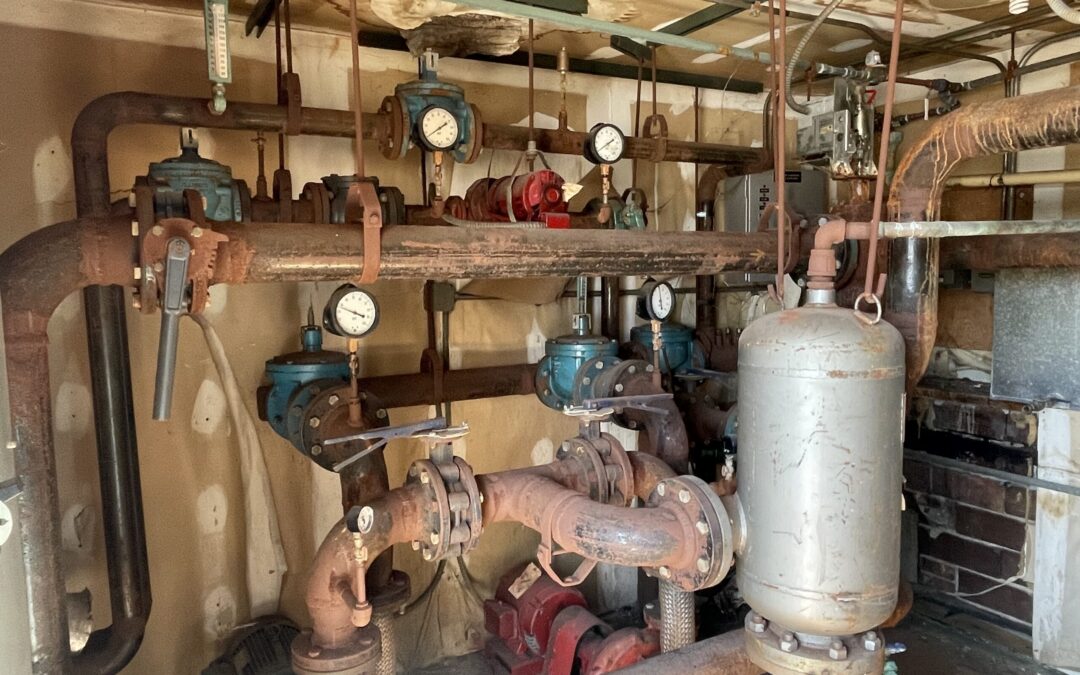
Adaptive re‑use projects offer a compelling and creative way to extend the life of existing buildings, but from an MEP perspective, they rarely behave like new construction or a standard renovation. While architectural constraints are often well understood early, mechanical, electrical, and plumbing systems can bring unexpected (and unwelcome) surprises. Aging infrastructure, outdated design assumptions, evolving codes, and tight physical constraints all converge, making early MEP involvement essential to managing risk, cost, and schedule.
Code exposure is one of the first risks we tackle together. Rather than assuming existing systems are grandfathered, we help the team evaluate how the scope of work may trigger current code requirements under the IEBC or local amendments. Early discussions around occupancy classification, selective system replacements, and performance upgrades allow the team to make informed decisions on ventilation, energy compliance, electrical protection, and plumbing capacity—while there is still flexibility in planning and budgeting.
Space constraints are another frequent pain point, particularly in older buildings with shallow plenums, limited shafts, or undersized mechanical rooms. We coordinate closely with architects to evaluate how MEP systems will coexist with structure, ceiling strategies, and architectural features. Early test fits, field verification, and 3D clash detection allow us to flag conflicts with ductwork, equipment footprints, electrical clearances, and riser space well before construction documents are finalized.
Existing documentation is treated as a baseline, not a certainty. We partner with architects and contractors on shared field verification—site walks, selective investigation, and early modeling—to confirm actual conditions. This approach helps uncover undocumented structure, abandoned utilities, and envelope limitations that can otherwise surface late as RFIs or change orders.
Long‑term access and maintainability are kept front‑of‑mind throughout design. We work with the construction team to vet equipment selections against real access constraints and replacement paths, and with architects to integrate necessary clearances without undermining design intent. Filter changes, valve access, panel clearances, and future equipment removal are evaluated as part of the design—not deferred to the field.
Occupied‑building constraints are addressed through coordinated phasing. Many adaptive re‑use projects require new systems to operate alongside existing ones while the building remains partially or fully occupied. We collaborate with contractors to align sequencing, temporary utilities, system cutovers, and controls integration so that design intent supports safe, realistic construction phasing and minimizes disruption to occupants.
By approaching these pitfalls as shared challenges—rather than isolated MEP issues—we help deliver adaptive re‑use projects that are code‑compliant, constructible, maintainable, and aligned with the overall architectural vision.